Modern Style: How to Adopt This Timeless Design Trend
HomeByMe
September 2025
5 minutes
Modern style remains one of the most influential movements in interior design. More than a passing trend, it offers a timeless way to live beautifully, balancing form and function.
What Is Modern Style in Interior Design?
Born at the turn of the 20th century, modern style emerged as a response to industrialization and a desire for simplicity. Its foundations lie in clean lines, open layouts, and a neutral palette that emphasizes functionality over ornamentation. Unlike contemporary style, which reflects the trends of the present moment, modern style is rooted in a specific historical period that spans the early to mid-1900s.
This adaptability explains why modern interiors still feel relevant today. The style’s DNA continues to influence current design movements, from Scandinavian minimalism to organic contemporary spaces.
8 Defining Characteristics of Modern Style
Clean Lines and Organic Shapes
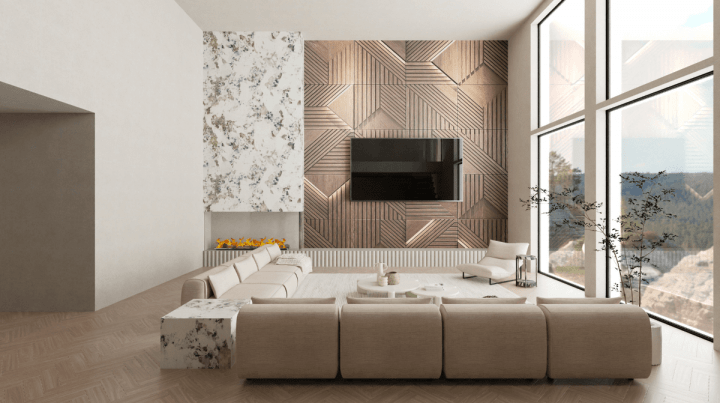
At the core of modern style is a respect for form. Furniture is stripped of unnecessary detail, reduced to clean, functional lines. Yet, the style avoids rigidity by incorporating organic curves. A modern sofa, for instance, might sit low and streamlined, while its silhouette subtly bends to invite comfort. This balance creates interiors that feel structured but never sterile. By pairing horizontal lines with natural curves, spaces become dynamic, allowing furniture to breathe and interact harmoniously with architecture.
Modern style with sleek lines and organic furniture curves
A Neutral and Natural Color Palette
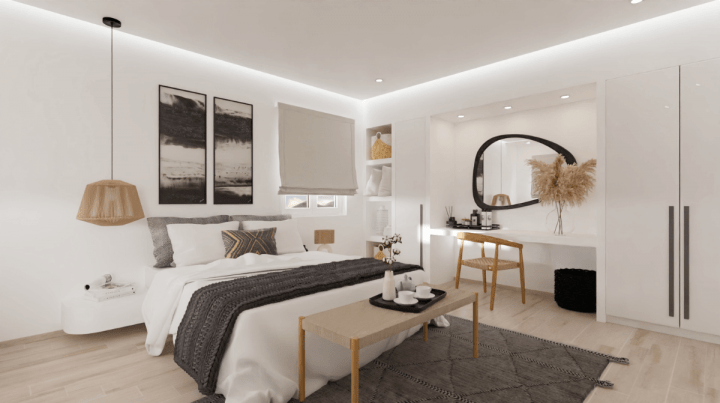
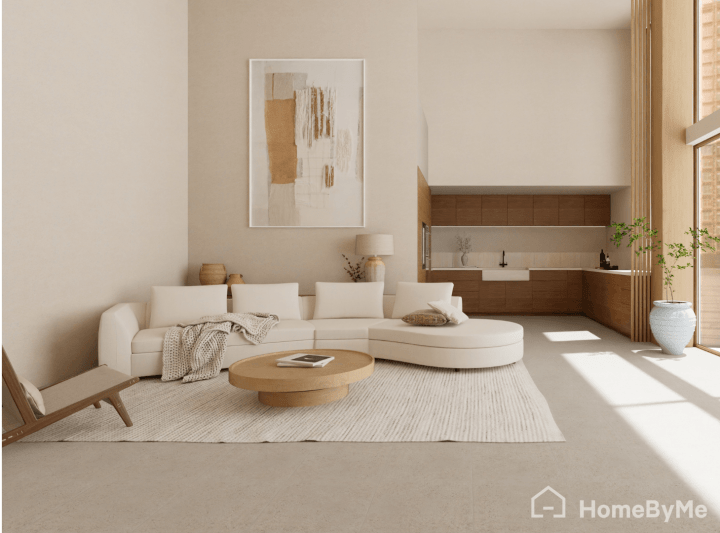
Color plays a crucial role in modern style in interior design. Walls, floors, and furnishings often adopt light and neutral tones soft whites, warm beiges, cool grays, and gentle earthy hues. These shades create a serene backdrop, allowing the architecture and textures of a room to take center stage. Contrast is introduced carefully, often through darker accents like matte black fixtures or deep brown wood. The result is a palette that feels calming, cohesive, and timeless, making it easy to live with while offering flexibility for personal touches.
A calming neutral palette defines this modern interior
Minimalist and Low Furniture
Furniture design in modern interiors prioritizes functionality and comfort without excess. Chairs, tables, and sofas are often low to the ground, built with straight lines and smooth surfaces that echo architectural simplicity. Materials are chosen for their inherent beauty rather than surface embellishment. Think of a dining table in unvarnished oak, or a lounge chair upholstered in linen, free of decorative trim. This minimalist approach reinforces the movement’s philosophy: beauty lies in functionality, not ornamentation.
Low-profile, minimalist furniture emphasizes function and simplicity
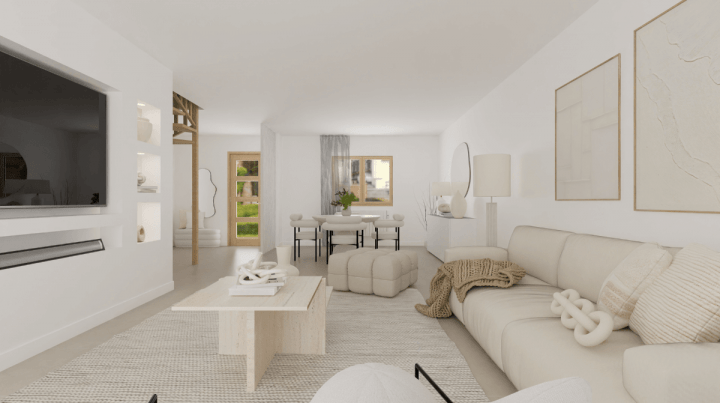
Modern interiors are characterized by open floor plans that dissolve the barriers between rooms. Instead of compartmentalized living, dining, and cooking areas, spaces flow into one another with a sense of ease. This openness fosters connection between people while maximizing natural light and air circulation. In modern style house plans, the architecture itself becomes the decoration. Ceilings are often high, circulation is fluid, and walls are kept uncluttered to enhance the spacious effect. The home feels like a canvas, where every element serves a purpose.
Open-plan modern design creates airy, uncluttered spaces
Natural Materials and Warm Textures
Modern design celebrates materials in their purest form. Wood is shown in its natural grain, stone in its authentic texture, and fabrics like cotton, linen, and wool in their honest simplicity. Metals such as steel or aluminum add contrast but are left unadorned, showcasing their industrial strength. The emphasis on organic textures grounds modern interiors, preventing them from appearing cold. A walnut coffee table, a sisal rug, or leather seating brings warmth, while each material highlights craftsmanship and authenticity.
Wood, stone, and natural fabrics bring warmth to modern style
An Absence of Fussiness
One of the most striking aspects of modern style is what it omits. Moldings, intricate trims, and heavy ornamentation are intentionally absent. Instead, walls are kept plain, windows are left bare, and decorative clutter is avoided. This lack of fussiness is not about austerity but about restraint. It allows the eye to rest, creating spaces that feel calm and unpretentious. In a world saturated with visual noise, modern interiors offer quiet sophistication.
Clean, uncluttered spaces showcase modern design’s simplicity
Natural Light as a Design Element
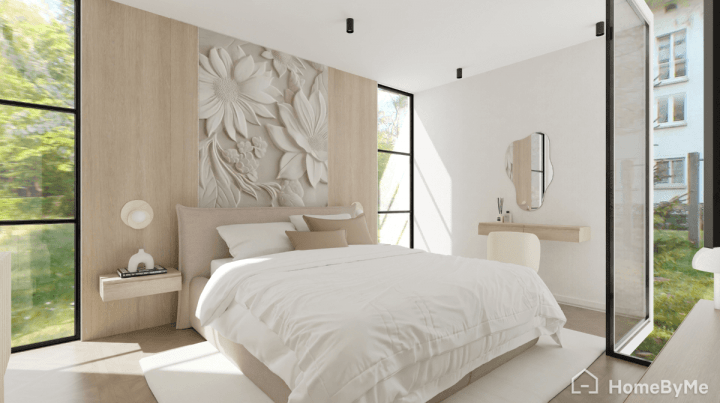
Modern spaces rely on abundant natural light to enhance openness and reduce the need for artificial fixtures. Large windows are central to this philosophy, often left uncovered or dressed minimally to let daylight flood interiors. Sunlight accentuates the clean lines of furniture and highlights the texture of natural materials. Beyond aesthetics, this connection to daylight nurtures well-being, making modern interiors not only visually appealing but also healthier environments to inhabit.
Abundant natural light enhances the openness of modern interiors
Greenery as a Vital Accent
Finally, modern interiors embrace nature not only through materials but also through living elements. Plants are used as sculptural accents, adding vibrancy and a touch of color without disrupting the neutral palette. A fiddle-leaf fig in a simple ceramic pot, or a collection of succulents on a windowsill, brings a sense of life and dynamism to otherwise minimalist spaces. Greenery softens geometry, reconnects interiors with the natural world, and underscores the organic spirit of modern design.
Subtle plants add life and vibrancy to modern style spaces
Modern vs Contemporary Interior Design: What’s the Difference?
The confusion between modern style and contemporary style is widespread, but the difference is fundamental. Modern style is tied to a distinct era and follows consistent principles : neutral palettes, organic materials, functional forms. Contemporary style, by contrast, is ever-changing, adapting to the aesthetics of the moment. What is considered contemporary today may look dated tomorrow.
Visually, the contrast is clear: contemporary interiors may experiment with bold colors, eclectic shapes, or decorative trends, while modern interiors remain firmly rooted in calm, simplicity, and timeless restraint.
Modern vs Contemporary
In the first episode of our series “10 Most Popular Interior Design Styles to Know Now,” Design Daddy, Interior Designer and HomeByMe Ambassador, captures the essence of modern style in a few carefully chosen words:
“It is clean, sleek, and unfussy. It focuses on form and function with neutral palettes and smooth finishes. Its adaptability makes it feel fresh decade after decade.”
Bringing Modern Style to Life With HomeByMe
Exploring modern interiors is easier than ever with HomeByMe. This free 2D and 3D planning tool lets you design modern style house plans, experiment with layouts, and visualize your project in 4K quality. You can test how natural light flows through an open plan, how neutral tones interact with furniture, or how greenery adds vibrancy to a space.
Try HomeByMe to bring your modern style home decor ideas into reality, from the first sketch to a photorealistic rendering.
Explore your own modern projects with HomeByMe, and see how this style can transform your space with elegance and clarity. For more insights into contemporary style, watch our video on YouTube and subscribe to stay inspired by the latest design trends